The Quiet Game by Halla Þórlaugsdóttir Shortlisted for 2025 Granum Translation Prize
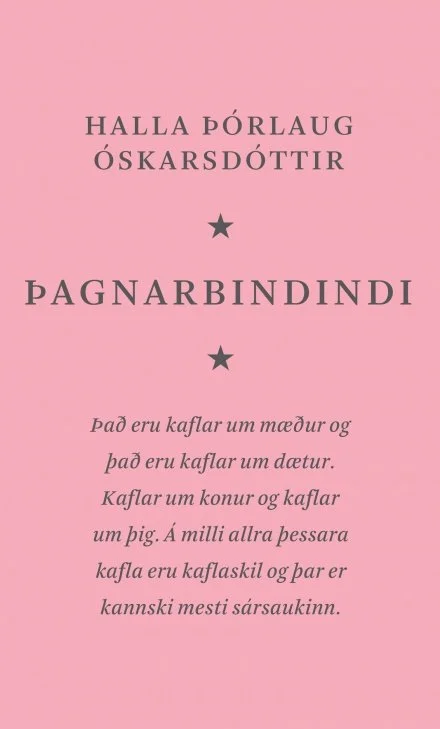
Larissa Kyzer’s translation-in-progress of Þagnarbindindi (‘The Quiet Game’), Halla Þórlaug Óskarsdóttir’s 2021 Maístjarnan Poetry Prize-winning work of prose poetry / autofiction was one of five projects shortlisted for the 2025 Granum Translation Prize.
This is the second time Larissa has been shortlisted for this award; her translation-in-progress of Kristín Eiríksdóttir’s Nordic Council for Literature Prize-nominated novel Tól (English title: ‘Exposure’) was shortlisted in 2023.
Via granumfoundation.org:
October 29, 2025 — We’re excited to announce the shortlist for the 2025 Granum Foundation Translation Prize!
Shortlist: Armen Davoudian translating Fatemeh Shams, Larissa Kyzer translating Halla Þórlaug Óskarsdóttir, Lee Kyung Min translating Sung Haena, Miranda Mazariegos translating Arnoldo Gálvez Suárez, and Fion Tse translating Lo Yu
The Granum Foundation was established to help U.S.-based writers complete substantive literary works and to help launch these works.
The Granum Foundation Translation Prize strives to acknowledge talented writers who seek to expand the readership of authors from around the globe and illuminate diverse voices.
Larissa Kyzer & Kristín Eiríksdóttir Participate in 2025 Art Omi Translation Lab
Translator Larissa Kyzer and Icelandic author Kristín Eiríksdóttir were selected to participate in the 2025 Art Omi Translation Lab. Taking place over 10 days in Ghent, New York, this residency gave Larissa and Kristín the opportunity to collaborate, in person, on an English translation of Kristín’s play Show All History. Since the residency, the newly translated play has been staged in France. It will also be presented as a staged reading at Princeton University in April 2026.
Fríða Ísberg's The Mark Longlisted for the Dublin Literary Award
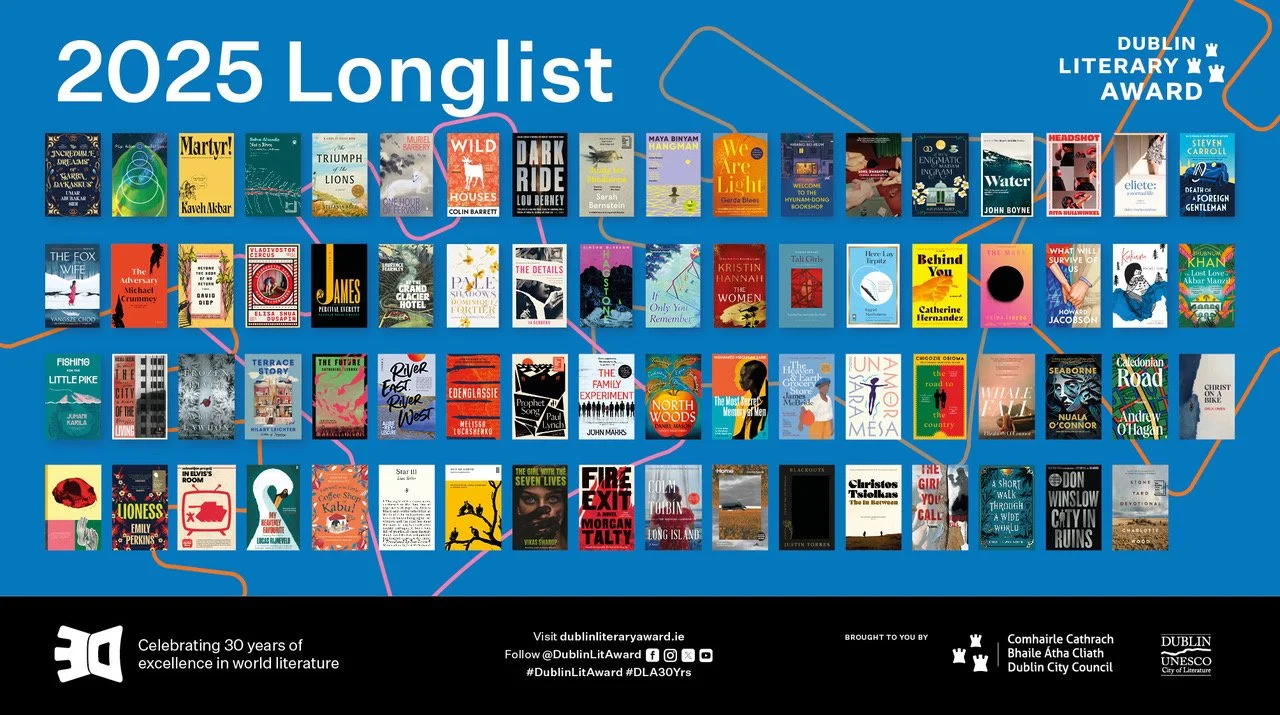
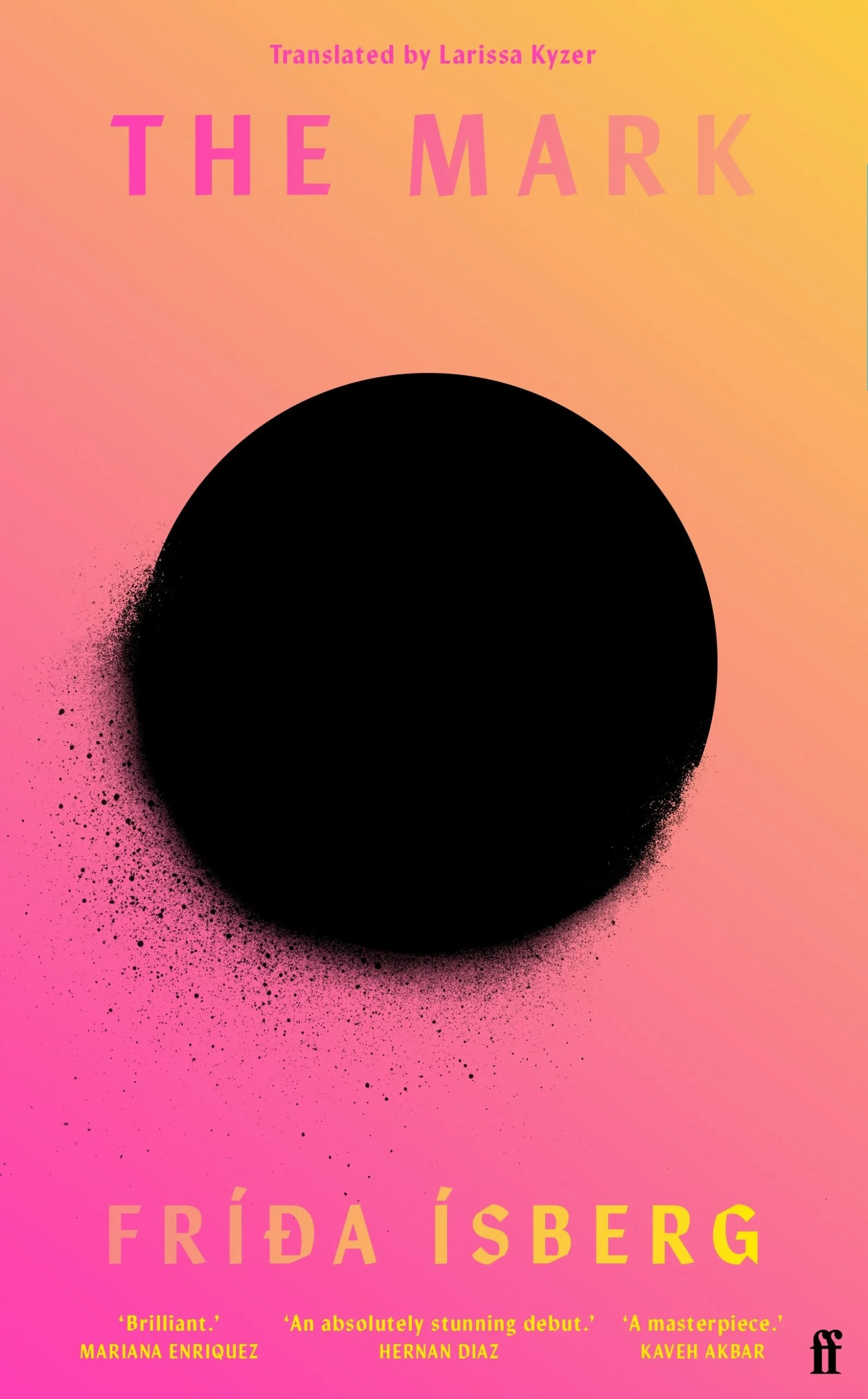
Fríða Ísberg’s debut novel, the speculative fiction title The Mark, translated by Larissa Kyzer, was longlisted for the 2025 Dublin Literary Award.
From the nominating committee at the Reykjavík City Library:
The book has generated a lot of interest and conversation in the Icelandic literary scene and was published by Forlagið in 2021. The novel was published in English in June 2024 by Faber Publishing House, translation by Larissa Kyzer. The Mark is the author’s debut novel, having previously published two poetry books and a collection of short stories. The novel has been well received by library users and Fríða Ísberg has participated in numerous literary events to present her book, both in Iceland and abroad. The Mark raises ethical questions about sympathy, polarization, information chaos and ideological conflict. The author takes a philosophical but approachable stance for the average reader. The book is unquestionably relevant to modern society and is innovative in style, form, and subject matter.
2025 National Endowment for the Arts Translation Grant
January 14, 2025
For Immediate Release
Larissa Kyzer Receives National Endowment for the Arts Literature Translation Fellowship
Fellowship will support the translation of
The Chill of the April Sun (Something Really Special) by Elísabet Jökulsdóttir
into English from Icelandic.
[Brooklyn, NY]—Today, the National Endowment for the Arts announced that Larissa Kyzer is one of 22 translators selected to receive a Literature Translation Fellowship of $10,000. This fellowship will support the translation of The Chill of the April Sun (Something Really Special) into English. In total, the NEA will award $325,000 in grants to support the translation into English of works written in 17 different languages from 21 countries.
NEA Director of Literary Arts Amy Stolls said, “The National Endowment for the Arts’ continued investment in contemporary translators preserves, strengthens, and advances our nation’s rich literary traditions. This new group of fellows is the latest in a longstanding legacy of support for translators of poetry and prose who—through the beauty and power of their words—inspire us, challenge us, and open our eyes to the important voices from countries around the world.”
Since 1981, the NEA has awarded more than 600 fellowships to 538 literary translators, with translations representing 82 languages and 93 countries. Visit arts.gov to browse bios and project descriptions from all of the 2025 recipients and past Literature Translation Fellows.
About the Project:
The Chill of the April Sun is a work of autobiographical fiction based heavily on author Elísabet Jökulsdóttir's real-life experiences from April 1978 to September 1979. During this 17-month period, 20-year-old Védís (a stand-in for the author) loses her estranged father, suffers a nervous breakdown, falls into a passionate but toxic relationship with a young man who dallies with substance abuse, forms her own dependency on alcohol and drugs, develops bipolar disorder, and works at the very mental health facility where she herself will be institutionalized in a matter of months.
Even with its nomination for the prestigious and high-profile Nordic Council Literature Award, The Chill of the April Sun has still only been translated into Danish, Swedish, and Polish. A smattering of her poems have been translated into French, German, and Polish, but her prose remains almost completely untranslated. In English, her oeuvre is limited to a handful of hard-to-locate pieces of flash fiction/prose poetry, as well as two unpublished plays. Of the ten short English translations that exist of Elísabet’s work, Larissa has translated five: three pieces of flash fiction and two microplays. Larissa also moderated an online conversation with Elísabet for Scandinavia House when The Chill of the April Sun was nominated for the Nordic Council Literature Prize.
Translator’s Personal Statement:
So many conversations about literature these days seem to be lamenting its imminent demise. I won’t litigate that here, but I will say that if literature is dying, then what I want more than anything on its way out are books that inspire me with their aesthetic weirdness and formal audacity, that tickle my ear and my funny bone, that taste fresh in my mouth when I read them aloud, that tell me something I didn’t know about the world. I want books that are fun to read and joyful in their possibilities, if not necessarily their content. The Chill of the April Sun is just such a work.
I often say that a good translator can translate almost anything, and I believe that. But if you don’t connect with the work you’re translating, it feels like putting on a wet sweater. The Chill of the April Sun is a sweater I love to wear. Language that I enjoy living in. It is intentionally simple but has fantastic rhythm and repetition and flow.
Elísabet allows her narrative to be guided by her trains of thought, and places as much faith in emotional truth as literal chronology. She eschews the traditional linearity of autobiography/fiction and steps outside of her narrative. She shirks the “rules” of fiction, finds fresh ways to break the fourth wall. April Sun is written in the third person, but periodically slips into the first, so that she can better reflect on significant events or details. The novel is set in the past, but frequently jumps forward in time, looks to a future beyond the confines of the story as if to reassure both author and reader that Védís/Elísabet is going to be okay—she is going to have a full life, even if the book ends on the cusp of her recovery. She is going to survive.
Bringing this work into English is also important because we need more books about mental health issues written by people who experience them. Reading such work is enlightening, demystifying, and humanizing. Elísabet’s candor about her struggles with bipolar 1 kickstarted long-overdue conversations about mental health(care) in Iceland. These are conversations we still need to have in the US.
I’m honored and grateful to receive this grant from the National Endowment for the Arts and thrilled to bring such a richly deserving author into English for the first time.
Author Bio:
Feminist icon and one of Iceland’s last real bohemians, Elísabet Jökulsdóttir has published over 30 works, including fiction, children’s literature, poetry, and plays. She’s a two-time recipient of the Fjöruverðlaun literary prize and a two-time nominee for the Nordic Council Literary Prize, most recently for The Chill of the April Sun, which also won the Icelandic Literature Prize. In 2016, Elísabet ran for president, a largely ceremonial position, on a platform of environmental protection, mental health, and empathy. In 2023, she successfully campaigned to have a street named for her; you’ll find Elísabetarstígur on the west side of Reykjavík.
Translator Bio:
Larissa Kyzer is a writer and Icelandic to English literary translator. Her translation of Kristín Eiríksdóttir’s A Fist or a Heart was awarded the American Scandinavian Foundation’s 2019 translation prize. The same year, she was one of Princeton’s Translators in Residence. Larissa’s translation work centers around contemporary authors and poets, focusing on emerging, exophonic, and women writers. She’s translated dozens of contemporary Icelandic authors, including Fríða Ísberg (The Mark), Sigríður Hagalín Björnsdóttir (The Fires), and Steinunn G. Helgadóttir (StrongestWoman in the World; forthcoming). Larissa has received grant funding and support from the European Union Prize for Literature, the Fulbright Commission, the Icelandic Ministry of Education and Culture, the Icelandic Literature Center, and Finland’s Kone Foundation. She is on the board of the American Literary Translators Association, a member of the Translators Organizing Committee, and runs the virtual Women+ in Translation reading series Jill!
Rights Contact and Additional Information:
World English rights are available for The Chill of the April Sun. Inquiries can be directed to the Reykjavík Literary Agency.
Judges' Statement on the 2024 Pen Translation Prize
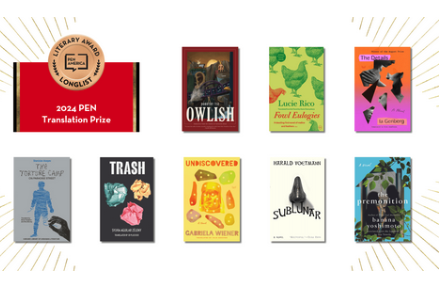
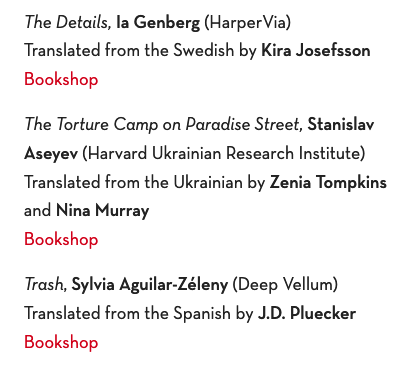
On Monday, April 8th this year, after much delay and little advance communication, PEN America announced the long lists for its 2024’s literary awards. This included the PEN Translation Prize that we, Larissa Kyzer, Hanna Leliv, Parisa Saranj, and Jenna Tang were judges for. At the time we were nominated for the judging committee, we were proud to have the opportunity to serve the literary translation community in this way, and excited for the chance to read so many fantastic translations by so many talented colleagues. There aren’t, after all, many high-profile venues in which literary translation is honored.
We judges are still proud of our work together, which was affirming, engaging, and uplifting. We are incredibly proud of our long and short lists. The books we selected were translated by true craftspeople, who enliven our profession and our art with their work. Our lists are a celebration of fresh voices, exciting aesthetics, bold translation choices, and courageous narratives. These stories stand as witness to the cruelties that people have, throughout time, visited on their fellow beings, as well as the possibilities of rebellion within suppressive social structures and of finding joy and meaningful connection in the everyday.
We are not, however, proud to be associated with PEN America at this time. Larissa Kyzer is a former co-chair of the PEN America Translation Committee and found much-needed community, mentorship, and support amongst the translators that she met in her time volunteering with PEN. Parisa Saranj has worked with the PEN America Writers at Risk program on several occasions to highlight the plight of Iranian writers and political dissidents. Jenna Tang dedicated two years to being fully involved in the PEN Translation Committee and helped organize translation-related events. Hanna is a new member of PEN hailing from Ukraine and, through her involvement, hoped to do more to raise visibility of the lesser translated literatures like her very own.
But we cannot conscience the way an organization specifically dedicated to free speech and freedom of expression, to the right of writers of and journalists to live and work in safety, has continuously withheld meaningful comment, has stifled dissent both within its ranks and at its events, and has attempted to sweep criticism and critique under the rug instead of participating in a good-faith dialogue about ways to meaningfully redress its wrongs and take a new path going forward.
While we wholeheartedly celebrate and honor the nominees for this year’s literary awards, we also want to honor the stance taken by Sublunary Editions in choosing not* to accept multiple nominations for this year’s PEN literary awards. (See the press’ full statement here.) We were delighted to read the Sublunary titles that we selected for inclusion on this year’s long list, but stand in solidarity with the publisher and the translators’ decision to withdraw from the award.
We hope that by adding our voices to those of the activists, organizers, writers, and translators who have already called upon PEN to live up to its mission to “unite writers and their allies to celebrate creative expression and defend the liberties that make it possible” we can collectively continue to push the organization toward a more robust engagement with its membership, a more respectful acknowledgement of and engagement with dissenting staff, and a more courageous fulfillment of its core values.
-Larissa Kyzer, Hanna Leliv, Parisa Saranj, and Jenna Tang
Translator Larissa Kyzer and Author Kári Tulinius Awarded €10,000 Grant and Two-Month Residency by Finland's Kone Foundation
Translator and author collaborators Larissa Kyzer and Kári Tulinius have been awarded a €10,000 Euro grant and two-month residency by Finland’s Kone Foundation. The grant will support the translation of Kári’s poetry, to be included in a future English-language Collected Works (read more about the project below).
Kári and Larissa’s application was one of 26 awarded places at the Kone Foundation’s Saari Residency in 2024, and was selected from a record number of applications: A total of 949 applications were submitted for individual residencies, of which 103 were working partners.
The pair will spend January and February 2024 at Saari and will have a full collection ready for publication (world English rights available) at the residency’s end.
Vanishing Glaciers – The Poems of Kári Tulinius
Climate change is a global phenomenon, but one part of the world where it has been especially visible is the subarctic. The arctic and subarctic regions of the planet have been warming at a quicker pace than those closer to the equator. That has led to rapid changes in the flora and fauna of land and sea, which has happened quickly enough to be noticeable. In the long history of nature poetry, one theme has recurred over and over again, the regularity of the seasons, and how the rhythms of nature are unchanging. In his poetry, Kári Tulinius pays very close attention to his environment, whether it's natural, built or societal. He picks up small details which he places within bigger systems, whether it is humanity's evolutionary heritage, animals in the natural world, or the place of individuals in the vastness of the universe. One theme that repeatedly surfaces in his work is the experience of living in Iceland during climate change, which make his poems especially pertinent now, as the island's ecosystem is conspicuously transforming. He is trying to answer the question what it means to be a nature poet when nature itself has been put out of balance by humanity, when landscape features as enormous as glaciers are melting away.
Screenshot by Bergur Ebbi, Out Now!
Have we all been uploaded to the cloud? In Screenshot, Bergur Ebbi sets out to look at technology from a human perspective. Or humanity from a technological perspective. What are the connections between fake news and artificial intelligence? How does it feel to live in a world where all our thoughts are categorized, rated, and commented on? Ancient people feared the world would end in fire and destruction — but what if it doesn’t? Maybe what we should fear is that nothing will ever be deleted or forgotten again.
Screenshot is a clever and informative journey through the conundrums of modern life and is guaranteed to set your mind spinning.
Bergur Ebbi is an Icelandic poet and essayist.
Translated by Larissa Kyzer.
Available in Icelandic bookstores and via the Forlagið website (foreign rights still available!).
Staging Translation: An Interview with Asymptote →
I recently had the great pleasure and honor of being interviewed by translator Sarah Timmer Harvey about translating A Fist or a Heart, Jill!, and various other odds and ends. The full interview can be read in Asymptote, here. An excerpt:
STH: A Fist or a Heart is set in the theatre world; Elín works as a prop-maker for theatre and film, and your translation of this particular milieu is so beautifully rendered. As I was reading it, following the characters as they scrambled behind the scenes to pull together a stage production, I was reminded of how similar this is to the work of the translator. A translated novel is often the result of months, if not years, of the translator working behind the scenes to produce a flawless translation of the original text, work that is frequently underappreciated by the reader in the same way that a prop-maker or set designer’s role is regularly overlooked by the theatre audience. Can you relate to this?
LK: I’ve never thought of translation like this before, but I like the metaphor, not least because props and stage design are actually some of the most tangible aspects of a stage production—they’re literally visible to the audience in a way that stage direction is not, but if they’re working well, you often don’t really think about them. Translator visibility is a funny thing—on the one hand, you (I) don’t want to make a translation “about you”; arguably, the whole point is to be a vehicle for someone else, for their writing and work. At the same time translation is a deeply creative, active process to me, so it feels weird to regularly be asked things like: “Don’t you want to do your own writing?”, and to still be having regular conversations with people about “loss” in translation, about why it is that translators are necessary at all when so many people in the world—in my case, Icelanders—are fluent in English.
What we do as translators does often seem to fade into the scenery because people often don’t realize what an enormous part translation plays in the everyday world. I’m thankful for the fundamental visibility I’ve been given by the people (authors, publishers, other translators) I’ve worked with; just being named is a big deal. I was over the moon when I found out that A Fist or a Heart would have my name (prominently) on the cover—it’s definitely not a given.
A Fist or a Heart Awarded the ASF's 2019 Translation Prize
In December 2019, I received the American-Scandinavian Foundation’s Nadia Christensen Translation Prize for my translation of Kristín Eiríksdóttir’s A Fist or a Heart. The Nadia Christensen prize is an annual award for the best translation submitted to the ASF's translation competition and includes a bronze medallion and a $2,500 award. The competition judges particularly praised the language of the translation, stating that it "convincingly captures the tactile, vigorous prose of the original in English."
“PICT URED SPLE NDOR” Nominated for the Pushcart Prize →
It gives me great pride to share that Spoon River Poetry Review has nominated my translation of Kári Tulinius’ poem “PICT URED SPLE NDOR” for a 2020 Pushcart Prize.
A Fist or a Heart Named One of 2019's Best in World Literature →
Library Journal has named A Fist or a Heart by Kristín Eiríksdóttir (trans. Larissa Kyzer) as one of 2019’s ten best World Literature titles.
“Lyrical, wrenching, and arresting as a fist punch to the heart, this award winner from Icelandic author Eiríksdóttir unfolds the growing concern of Elín Jónsdóttir, a seventyish theater props designer, for troubled young playwright Ellen Álfsdóttir. At the same time, the slow revelation of a terrible incident in Elín’s youth explains her insular existence while building with thrillerlike intensity. North-star bright.”
Appointment as Princeton's Fall 2019 Translator-in-Residence →
From the announcement on the PIIRS (Princeton Institute of International and Regional Studies) website:
Larissa Kyzer and Damion Searles have been named as Princeton University’s Translators in Residence for the 2019-2020 academic year by the Program in Translation and Intercultural Communication (PTIC).
[…]
The PTIC program resides within the Princeton Institute for International and Regional Studies, which provides support for translation workshops, guest lectures, study abroad and new courses.
WiT Month Translators' Recommended Reads List
Without further ado, here is the Women in Translation (WiT) Month Translators’ Recommendations list! Each and every one of the 147 recommendations was recommended by a translator and written and/or translated by a person who identifies as a woman. My heartiest thanks to Alex Zucker, from whom I borrowed the idea in the first place, and to each and every one of the translators who took the time to contribute to this!
These 147 recommendations come from 33 languages and (roughly) 60 places around the world. Many of them include personalized recommendations; all of them look (I think, at least) utterly fascinating.
(Please note that while I made every effort to reach out to translators working from a wide spectrum of languages and through various networks and means of contact, I’m in no way saying that this is a comprehensive list of every good book that has been written and/or translated by a woman. I also made my best effort at filling in information gaps, but it's likely there are still some mistakes in here; if you see errors in spelling/information, these are likely my own.)
The idea in compiling this list was to be able to disseminate it widely, so please: take it to your favorite bookstore and/or your local library branch and encourage them to make a WiT display. You can also send it to anyone looking for something good to read!
Here's the link that should allow you to access/download the spreadsheet from GoogleDrive. I can also send anyone who wants it an XL file.
Poetry Translation Slam at PEN World Voices Festival
From the PEN World Voices event write-up:
The Festival favorite returns! Witness an illuminating and exhilarating literary debate with competing translations of Japanese and Icelandic poems. Then, join an interactive discussion on the art of translation with Icelandic poet Gerður Kristný and Japanese writer Kanako Nishi, who will be joined by literary translators Larissa Kyzer, Kara B. Thors, Terry Gallagher, and Iyasu Nagata. Hosted by Allison Markin Powell and Björn Halldórsson.
Co-presented with the Nuyorican Poets Cafe.
May 9
7:00 - 8:30 PM
Nuyorican Poets Cafe
Tickets $12 in advance; $15 at the door.
Purchase tickets here.
This Week in Iceland: Monday, Bun Day!
Had a great time talking about Bolludagur (‘Bun Day’), Beer Day, missing persons, refugee-led protests, and worker-led strikes with editor and writer Eygló Svala Arnarsdóttir and host Alex Elliott on RÚV’s new(ish) English-language weekly news roundup, “This Week in Iceland.”
The episode I took part in is available to stream on RÚV here; the program airs weekly on Mondays and all of the episodes are archived here.
Kristín Eiríksdóttir Nominated for the Nordic Council's Literature Prize
Kristín Eiríksdóttir’s 2018 novel Elín, ýmislegt has been nominated for the Nordic Council’s Literature Prize alongside Kristín Ómarsdóttir’s Kóngulær í sýningargluggum.
“The main themes of Kristín Eiríksdóttir’s writings are longing for love and understanding and the struggle against isolation, loneliness, abuse, violence and horror,” wrote the judges. “The novel Elín, ýmislegt is a clear example of this. We hear a young woman’s powerful voice in an artistic and focused text.”
The winner of the prize will be announced in Stockholm on October 29. Almost exactly a month before that, however, English-language readers will be able to read my translation of the novel, which is set to be released by AmazonCrossing on September 23, 2019.
Attending the 2019 Breadloaf Translator's Conference
Thrilled to have been accepted to Middlebury College’s Breadloaf Translator’s Conference in Ripton, Vermont this summer, and possibly even better yet, to have received a Katharine Bakeless Nason scholarship to fund my attendance. While there, I’ll be taking part in a Manuscript workshop and working on new translations of short stories from Fríða Ísberg’s collection Kláði (‘Itch’).
Translation Session during Multilingual Writing Lab (Rvk)
I’m very pleased to announce that this coming February, I’ll be facilitating a session during a multilingual, multicultural, multimedia writing lab that has been designed by Iceland-based Canadian poet Angela Rawlings. The workshop is co-sponsored by Borgarbókasafn (the Reykjavík Public Library), Söguhringur kvenna, Ós Pressan, and W.O.M.E.N.
Angela has designed and will be leading four sessions of this writing lab for cis and trans women of foreign origin. My own session will be focused on translation (although no special translation - or language - skills are necessary), specifically the process of translating collaboratively with an author who writes in a language that you, the translator, do not speak. I’ve worked like this once myself before, translating a poem from Polish in close collaboration with the poet, and it was a really fascinating and illuminating process.
Other sessions—including one on authorial identities and writing in a second language, and one in which participants' writing will be transformed into audio—will be facilitated by our fellow Ós Pressan members Elena Ilkova, Ewa Marcinek, and Randi W. Stebbins.
Bilingual Reading at ALTA41
I’m delighted to be taking part in the bilingual reading series at this year’s ALTA conference. I’ll be reading poetry by Kári Tulinius, both some of his experimental ‘4x4s’ which I published in Exchanges in 2017, as well as his poem “Oral Exam in Civic Engagement,” which appeared in the Summer 2018 issue of Cafe Review.
I’ll be the first reader during the 9th bilingual reading session, “Poetry Miscellany” on Saturday, November 3, 2018 at 9:00 AM. I’ll be reading alongside a translator and author of poetry in American Sign Language, as well as translators from Portuguese, Romanian, Biblical Hebrew, and Polish.
Should be fun!